Creatine Forms: Which Type Is Best?
Creatine forms compared - monohydrate vs HCL vs Kre-Alkalyn and 15 more. Data-driven comparison saves you money.
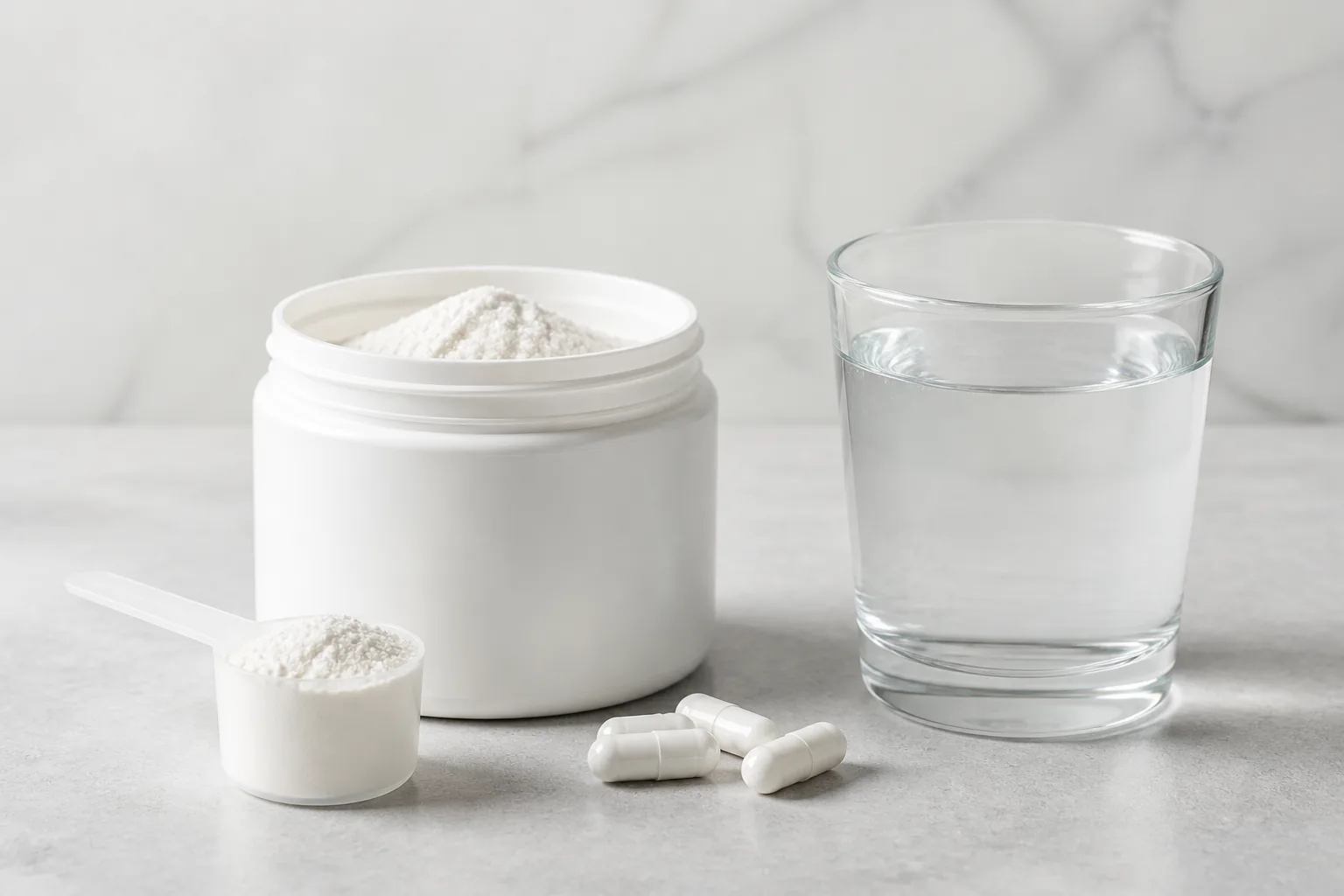
Understanding the Different Types of Creatine
Walk into any supplement store or browse an online marketplace, and you will encounter creatine sold in a dozen different forms: monohydrate, hydrochloride (HCL), buffered (Kre-Alkalyn), ethyl ester, magnesium chelate, creatine nitrate, and many more. Each variant claims some advantage — better absorption, less bloating, faster results — but what does the research actually say? The answer is more straightforward than the marketing suggests.
Creatine monohydrate remains the most studied, most proven, and most cost-effective form of creatine available. Over 500 studies have used creatine monohydrate as the intervention, establishing its efficacy and safety beyond doubt. Alternative forms have far less research backing their claims, and in head-to-head comparisons, none have consistently outperformed standard monohydrate. That said, some forms offer practical advantages — creatine HCL dissolves more easily in water, and micronized monohydrate reduces grittiness — that may matter for your daily experience.
Data-Driven Comparisons to Save You Money
This section breaks down every major creatine form with honest, evidence-based assessments. For each type, we explain what it is, how it differs chemically from monohydrate, what the research shows about its effectiveness, and whether the premium price is justified. We also address common marketing claims — like "creatine HCL requires a smaller dose" or "buffered creatine prevents bloating" — and evaluate them against published data.
If you are deciding which form of creatine to buy, these guides will help you avoid overpaying for unproven formulations. For specific product recommendations, visit our product reviews or see how different products stack up in our comparison section.
Other Topics
Creatine Anhydrous: The Concentrated Form of Creatine Without Water
Creatine anhydrous removes the water molecule for higher creatine per gram. Review research, dosing, and comparison to monohydrate.
Creatine Gluconate: Glucose-Bonded Creatine with Minimal Research
Creatine gluconate bonds creatine to gluconic acid. Review the limited research, theoretical benefits, and comparison to monohydrate. The data may surprise you.
Creatine Malate: Benefits, Research & How It Compares to Monohydrate
Creatine malate combines creatine with malic acid for Krebs cycle support. Review the research and benefits.
Creatine Orotate: Combining Creatine with Orotic Acid — Worth the Premium?
Creatine orotate bonds creatine to orotic acid. Review research on this premium form, cardiac benefits claims, and comparison to monohydrate.
Creatine Pyruvate: Benefits, Research and Is It Worth the Premium Price?
Creatine pyruvate combines creatine with pyruvic acid. Review research on this premium form and its value.
Creatine AKG (Alpha-Ketoglutarate): A Krebs Cycle Combo — Worth It?
Creatine AKG bonds creatine to alpha-ketoglutarate, a Krebs cycle intermediate. Premium priced with limited research. Full comparison with monohydrate.
All Articles (33)
Browse All Articles
Showing 33 of 33 articles