Skip to content

Phosphocreatine System — Glossary | Creatine.my

3 min read

What is the Phosphocreatine System?

The phosphocreatine system (also called the ATP-PCr system or the phosphagen system) is the body’s fastest energy system, responsible for regenerating ATP (adenosine triphosphate) during the first 8-12 seconds of maximal-intensity exercise.

When you perform an explosive movement — a maximal sprint, a heavy deadlift, a powerful jump — your muscles consume ATP almost instantly.

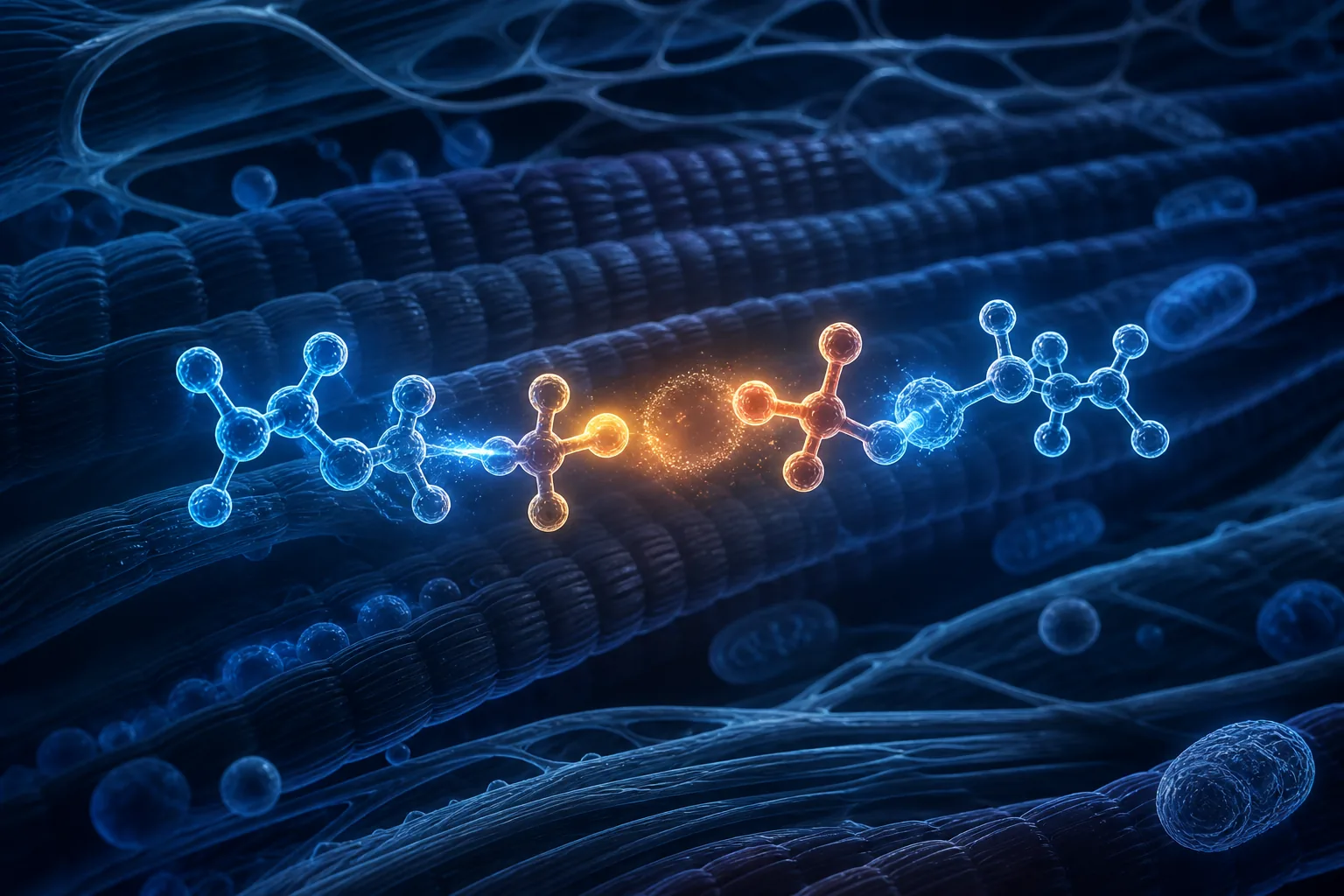
The phosphocreatine system regenerates this ATP by transferring a phosphate group from phosphocreatine (PCr) to ADP (adenosine diphosphate), catalysed by the enzyme creatine kinase:

PCr + ADP → ATP + Creatine

This reaction is almost instantaneous, which is why the PCr system is the dominant energy pathway for short, explosive efforts.

It does not require oxygen (anaerobic) and produces no lactate or hydrogen ions, meaning it does not contribute to the “burning” sensation associated with glycolytic exercise.

Relevance to Creatine Supplementation

Creatine supplementation directly fuels the phosphocreatine system.

By increasing intramuscular PCr stores by 20-40%, creatine supplementation provides more substrate for rapid ATP regeneration.

This translates to measurable performance benefits during high-intensity, short-duration activities.

Harris et al. (1992) first demonstrated that oral creatine supplementation increases muscle phosphocreatine concentrations in humans, establishing the scientific foundation for creatine as a sports supplement.

Subsequent research has confirmed that increased PCr stores allow athletes to maintain higher power outputs for slightly longer periods, recover faster between repeated efforts, and sustain performance across multiple sets.

For Malaysian athletes involved in sports with repeated explosive efforts — badminton, sepak takraw, football, martial arts — the phosphocreatine system is the primary mechanism through which creatine supplementation enhances performance.

Clinical Significance

Understanding phosphocreatine system is not merely academic — it has direct practical implications for anyone using creatine supplements.

The relationship between this concept and creatine supplementation outcomes has been explored in peer-reviewed research, and understanding it helps explain individual variation in creatine response.

Approximately 20-30% of creatine users are classified as “non-responders” or “low responders.” Part of this variation can be explained by differences in the underlying biological mechanisms, including the processes related to phosphocreatine system.

Individuals with naturally higher baseline levels of certain metabolites may see smaller relative improvements from supplementation.

How This Connects to Creatine Dosing

The practical dosing recommendations for creatine — 3-5g daily for maintenance, or 20g/day split into 4 doses during a loading phase — are directly informed by the biochemistry behind phosphocreatine system.

These dosage ranges were established through clinical trials that measured the biological markers associated with this process.

Key dosing connections:

  • Loading phase (20g/day for 5-7 days): Rapidly maximises the biological processes related to phosphocreatine system, achieving muscle saturation approximately 4x faster than maintenance dosing alone
  • Maintenance dose (3-5g/day): Maintains the elevated levels achieved during loading, compensating for the natural daily turnover rate of approximately 1.7% of total creatine stores
  • Body-weight adjusted dosing: Larger individuals (80kg+) benefit from the higher end of the range (5g) due to greater total tissue mass requiring saturation

Measurement and Testing

In clinical and research settings, the processes related to phosphocreatine system can be measured through several methods:

  • Muscle biopsy — the gold standard for directly measuring intramuscular creatine and phosphocreatine levels, but invasive and impractical for routine use
  • MRS (Magnetic Resonance Spectroscopy) — non-invasive imaging that can estimate phosphocreatine content in specific muscle groups
  • Blood creatinine levels — an indirect marker, since creatinine is a breakdown product of creatine metabolism. Note: elevated creatinine from supplementation does NOT indicate kidney damage
  • Performance testing — practical proxy measures including repeated sprint performance, 1RM strength tests, and work capacity assessments

For creatine users who want to assess whether supplementation is working, performance tracking over 4-8 weeks is more practical and informative than blood tests.

Common Misconceptions

Several misconceptions exist around phosphocreatine system in the context of creatine supplementation:

  1. “More is always better” — biological systems have saturation points. Once muscle creatine stores reach maximum capacity (~160 mmol/kg dry muscle), additional creatine is simply excreted. Taking more than 5g/day during maintenance offers no additional benefit for most people.

  2. “It works immediately” — the biological processes take time. Without a loading phase, expect 3-4 weeks before reaching full saturation. Benefits become measurable after this saturation period.

  3. “It only matters for muscles” — creatine and its related processes are important in brain tissue, cardiac muscle, and other metabolically active tissues. This is why research now explores creatine for cognitive function, not just athletic performance.

Practical Takeaway for Malaysian Consumers

For consumers in Malaysia, understanding the science behind creatine helps distinguish evidence-based practice from marketing hype.

The Malaysian supplement market includes many products that make claims about enhanced absorption, superior forms, or revolutionary delivery systems.

However, the fundamental biology shows that:

  • Standard creatine monohydrate effectively raises muscle creatine stores by 20-40%
  • No alternative form has demonstrated superior outcomes in independent research
  • The ISSN (International Society of Sports Nutrition) recommends monohydrate specifically

Purchase pure creatine monohydrate from verified Malaysian sellers at RM0.50-2.50 per serving — the most cost-effective supplement available.

Sources & References

Full citations available in our Research Library.

References

  1. Harris RC, Söderlund K, Hultman E. (1992). Elevation of creatine in resting and exercised muscle of normal subjects by creatine supplementation. *Clinical Science*. doi:10.1042/cs0830367 PubMed

Frequently Asked Questions

How long does the phosphocreatine system last?

The phosphocreatine system provides energy for approximately 8-12 seconds of maximal effort. After PCr stores are depleted, the body shifts to glycolytic and oxidative energy systems. Creatine supplementation increases PCr stores, potentially extending this window by 1-3 seconds — a meaningful difference in competitive sport.

Why is the phosphocreatine system important for athletes?

The PCr system is the fastest way the body can regenerate ATP. It does not require oxygen and produces energy almost instantly. This makes it critical for explosive movements: sprinting, jumping, throwing, heavy lifts, and rapid changes of direction. Sports with repeated short bursts (football, badminton, HIIT) rely heavily on this system.

Fact-checked against peer-reviewed research · Our editorial policy